Lithium vs Lead Acid Battery for Solar in Pakistan 2026
If you are building a solar system in Pakistan in 2026, this is the one decision that affects your cost for the next 10 years: lithium or lead acid (tubular/gel) battery. Lithium costs 3 to 6 times more upfront, but it can outlast three lead acid batteries and give you almost double the usable power from the same rated size. This guide breaks down real numbers so you can work out which one actually saves you money over time, not just on day one.
In This Guide
- Quick Comparison Table
- Lead Acid (Tubular/Gel) Battery Breakdown
- Lithium Battery Breakdown
- Real Cost Over 10 Years
- Why Usable Power Matters More Than Ah Rating
- Which One Should You Choose
- Frequently Asked Questions
Quick Comparison Table
| Factor | Lead Acid (Tubular/Gel) | Lithium (LiFePO4) |
|---|---|---|
| Price (5kWh equivalent) | Rs. 60,000 – 85,000 | Rs. 180,000 – 280,000 |
| Safe discharge depth (DoD) | 50% (tubular), 70-80% (gel) | 90-95% |
| Usable capacity from 5kWh rated | 2.5 – 3.5kWh | 4.5 – 4.75kWh |
| Cycle life | 500 – 1,500 cycles | 6,000+ cycles |
| Real-world lifespan | 4 – 6 years (tubular), 10-15 (gel) | 8 – 12 years |
| Maintenance | Monthly water top-up (tubular) | None |
| Weight (5kWh equivalent) | 150 – 200 kg | 45 – 55 kg |
| Charging speed | Slower, sensitive to fast charge | Faster, handles higher charge rates |
Lead Acid (Tubular/Gel) Battery Breakdown
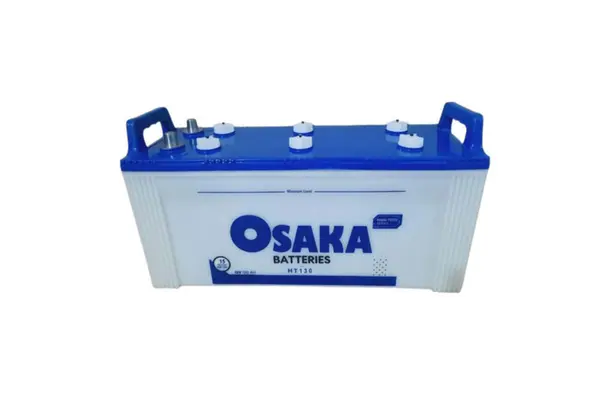
Lead acid is still what most Pakistani homes use, mainly because the upfront price is much lower. A tubular battery uses tube-shaped plates that hold more active material than a flat-plate battery, which is why it handles solar charging cycles better than a normal car or UPS battery. But even a good tubular battery should only be drained to about 50% of its rated capacity. Push it further, regularly, and the plates degrade fast, cutting the battery’s life down to a year or two instead of the expected 4 to 6.
Gel batteries are a step up within the lead acid family. They use a thick, sealed electrolyte instead of liquid acid, which means no water top-ups and better heat resistance. A genuine Narada gel battery can last 10 to 15 years, but it also costs close to what a small lithium setup costs, so the value math gets closer here.
Prices for tubular batteries in Pakistan range from Rs. 22,000 for a 150Ah Phoenix model to Rs. 85,000 for a large 250Ah AGS Tall Tubular. See our Tubular Battery Price in Pakistan guide for the full brand-wise list, or our Gel Battery Price in Pakistan guide for gel-specific pricing.
Lithium Battery Breakdown
Lithium (specifically LiFePO4, the type used in solar) stores more usable energy per kilogram and per rupee spent, once you look past the sticker price. A 5.12kWh lithium battery from a brand like Narada or Inverex costs Rs. 180,000 to Rs. 260,000 in Pakistan right now. That sounds expensive next to a Rs. 70,000 tubular battery, until you account for how much of each battery you can actually use.
A lithium battery’s built-in BMS (Battery Management System) protects the cells, balances charge across them, and allows a much deeper discharge than lead acid without shortening its life. This is also why lithium batteries charge faster and handle Pakistan’s hot summers better than most lead acid batteries, which lose capacity in extreme heat.
For full model-by-model lithium pricing, see our Lithium Battery Price in Pakistan guide.
Real Cost Over 10 Years
This is the number that actually matters, not the price tag on day one. Here is a simple 10-year cost comparison for a home needing about 4.5kWh of usable daily backup:
| Cost Item | Tubular (Lead Acid) | Lithium |
|---|---|---|
| Battery needed for 4.5kWh usable | Two 250Ah tubular batteries (~6kWh rated, 50% usable) | One 5.12kWh lithium battery (90% usable) |
| Upfront cost | Rs. 140,000 – 170,000 | Rs. 180,000 – 260,000 |
| Replacements needed in 10 years | 1 to 2 full replacements (every 4-6 years) | 0 (lasts 8-12 years) |
| Total 10-year cost (battery only) | Rs. 280,000 – 340,000 | Rs. 180,000 – 260,000 |
| Water/maintenance cost over 10 years | Small but recurring (distilled water, checks) | Rs. 0 |
Once you factor in replacement cost, lithium often works out cheaper over a full 10-year period, not more expensive. The upfront cost is just higher, which is why so many people stop at the sticker price and pick lead acid without running these numbers.
Why Usable Power Matters More Than Ah Rating
A 200Ah tubular battery and a 5.12kWh lithium battery are not directly comparable just by looking at the rated number. The tubular battery is rated for 200Ah at 12V, which is 2.4kWh, but you can only safely use about 1.2kWh of it before you risk damaging the battery. The lithium battery is rated at 5.12kWh, and you can safely use around 4.6 to 4.9kWh of it. This is the single most confusing part of comparing battery types, and it’s why people are often surprised that their “big” tubular bank doesn’t give them the backup hours they expected.
Which One Should You Choose
Choose tubular lead acid if your budget for the battery portion is under Rs. 100,000, or if you are not sure yet how much backup you actually need and want to start small. It is also the easier option to repair or swap part of a bank if only one battery in a series fails.
Choose lithium if you are building a serious hybrid solar system meant to run daily for a decade, if you want to avoid ever thinking about water top-ups, or if your roof and inverter budget already puts you in the range where an extra Rs. 100,000 to 150,000 for the battery isn’t the deciding factor. Choose gel if you want something in between: no maintenance like lithium, but at a price closer to (though still above) tubular, with the trade-off of not getting lithium’s deep discharge advantage.
Frequently Asked Questions
Is lithium battery really worth the price difference for solar in Pakistan?
In most cases, yes, once you look at a 10-year timeline instead of just the purchase price. A lithium battery avoids one or two replacement cycles that a tubular battery needs, has no maintenance cost, and gives you close to double the usable power for the same rated capacity. If you plan to keep your solar system running for less than 5 years, tubular is the more practical choice since you likely won’t reach the point where lithium’s advantage pays off.
Can I mix lithium and lead acid batteries in the same solar system?
No, this is not recommended. Lithium and lead acid batteries have very different charging voltage curves and charge acceptance rates. Mixing them in the same bank causes uneven charging, which damages both battery types faster and can create safety risks. If you want to upgrade from lead acid to lithium, replace the entire bank rather than adding lithium alongside your existing tubular batteries.
Does Pakistan’s hot climate affect lithium batteries differently than lead acid?
Both battery types lose some performance in extreme heat, but lead acid batteries are affected more. High summer temperatures speed up water loss and plate corrosion in tubular batteries, shortening their life if not maintained closely. Lithium batteries with a built-in BMS handle heat better and are less sensitive to Pakistan’s 40-45°C summer days, though installing either type in a shaded, ventilated space extends its life either way.
What size lithium battery replaces a typical 2-battery tubular bank?
A common home setup of two 200Ah tubular batteries (rated around 4.8kWh combined, about 2.4kWh usable) can usually be replaced with a single 5.12kWh (48V or 51.2V) lithium battery, which gives you roughly 4.6 to 4.9kWh of usable power, nearly double what the tubular bank provided.