
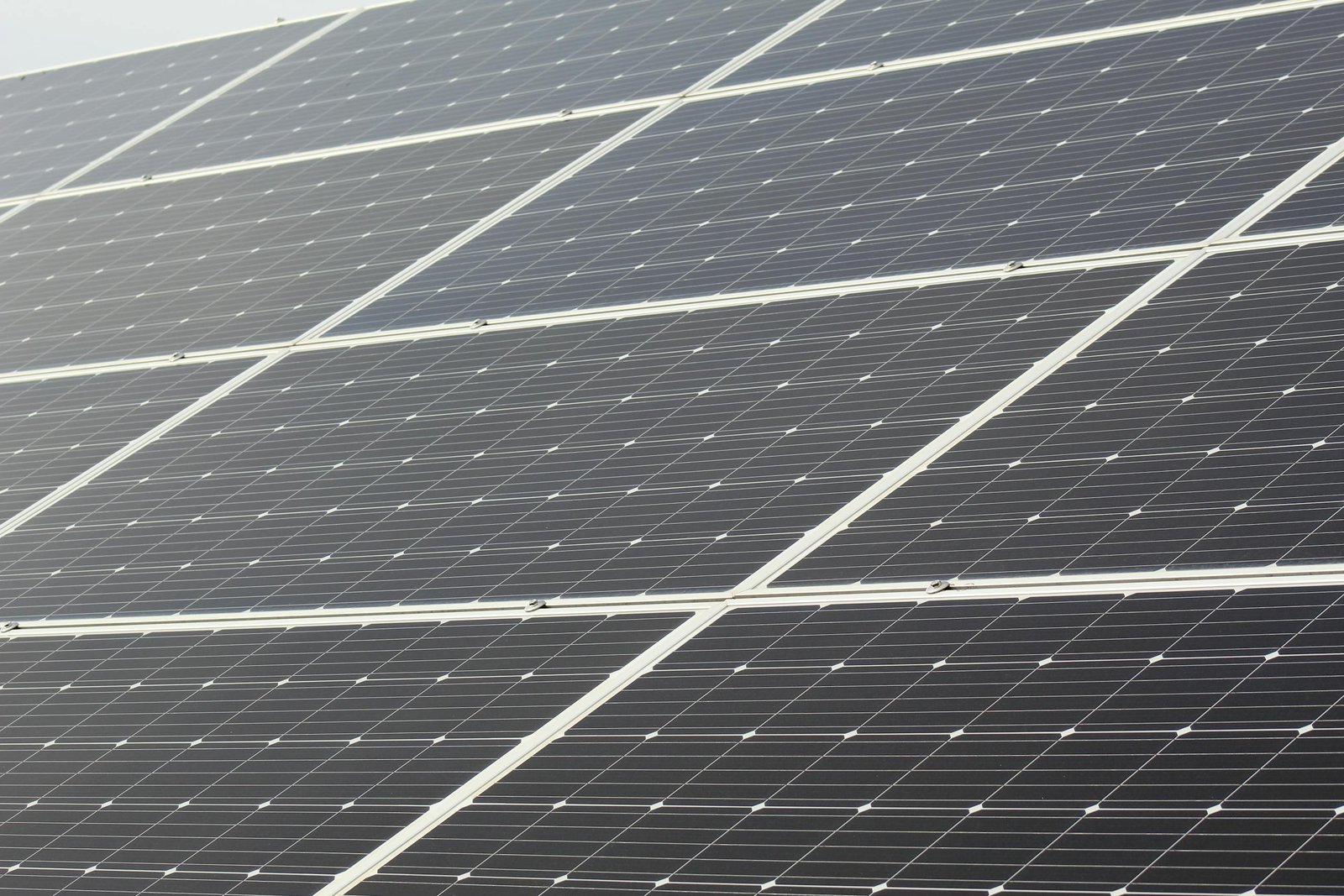
How to Choose the Right Solar Panel for Your Home
Going solar is one of the smartest financial decisions a Pakistani homeowner can make right now. Electricity bills have gone up sharply, load shedding is still a problem in many cities, and solar panel prices have dropped significantly over the past few years. But walking into a solar market without any knowledge is risky — there are dozens of brands, technologies, wattages, and price points to choose from.
This guide will walk you through everything in simple language. By the end, you will know exactly what type of panel suits your home, what questions to ask the dealer, how to compare prices fairly, and how to keep your system running properly for the next 25 years.
Understanding Solar Panel Types
Before you spend a single rupee, you need to understand that not all solar panels are the same. There are three main types available in Pakistan’s market right now, each with different prices, efficiency levels, and lifespans.
1. Monocrystalline Panels (Mono)
These are the most common panels sold in Pakistan today. They are made from a single crystal of silicon, which makes them more efficient and more expensive than other types. Monocrystalline panels are dark blue or black in colour. They work best on limited roof space because they produce more electricity per square foot. Almost all Tier-1 brands — Longi, Jinko, JA Solar, Trina — sell monocrystalline panels.
2. Polycrystalline Panels (Poly)
These are older technology panels made from multiple silicon crystals melted together. They are lighter blue in colour and cheaper to buy — but they are also less efficient and degrade faster. In 2026, polycrystalline panels are becoming harder to find in Pakistan because most buyers and dealers have moved to mono panels. Avoid poly panels if possible — the small saving upfront is not worth the lower output over 25 years.
3. N-Type vs P-Type — The Most Important Difference in 2026
This is the most important distinction for Pakistan buyers right now. Both mono and poly panels can be either P-Type (older) or N-Type (newer). Here is the simple difference:
| Feature | P-Type (Mono PERC) | N-Type (TOPCon / HPBC) |
|---|---|---|
| Efficiency | 20 – 21% | 22 – 23.3% ⭐ |
| Hot Weather Performance | Average | Much better ⭐ |
| Annual Degradation | 0.55% per year | 0.40% per year ⭐ |
| Output After 25 Years | ~86% | ~90% ⭐ |
| Price Difference | Cheaper | Rs. 3–5 more per watt |
| Best For | Tight budgets | Long-term investment ⭐ |
4. Monofacial vs Bifacial Panels
A monofacial panel collects sunlight only from the front. A bifacial panel collects sunlight from both the front and the back. If your roof surface is light-coloured — white, cream, or light grey — a bifacial panel captures the reflected light from your roof through its back surface, giving you 5 to 15% extra electricity for free. Most N-Type panels sold in Pakistan in 2026 are bifacial.
| Panel Type | Best For | Extra Output | Price Premium |
|---|---|---|---|
| Monofacial | Any roof, standard installation | None | Base price |
| Bifacial | Light-coloured roofs, elevated mounts | 5 – 15% extra | Rs. 1 – 2 more per watt |
Key Factors to Consider When Choosing
Now that you understand the panel types, here are the key factors that will actually decide which panel is right for your home:
Factor 1 — Your Monthly Electricity Usage
Before you buy a single panel, look at your last 6 electricity bills and find your average monthly units (kWh). This number tells you exactly how big a solar system you need. A system that is too small will not cover your bills. A system that is too large will cost more than needed.
| Monthly Usage | System Size Needed | Panels Required (585W) | Rough Total Cost |
|---|---|---|---|
| Up to 300 units | 3 kW | 6 panels | Rs. 350,000 – 450,000 |
| 300 – 500 units | 5 kW | 9 panels | Rs. 550,000 – 700,000 |
| 500 – 800 units | 8 kW | 14 panels | Rs. 850,000 – 1,100,000 |
| 800 – 1,200 units | 10 – 12 kW | 18 – 21 panels | Rs. 1,100,000 – 1,500,000 |
Factor 2 — Your Roof Space
Each 585W panel takes up about 2.6 square metres of roof space. Measure your available south-facing roof area before shopping. If your roof space is limited, choose higher-efficiency panels like Longi Hi-MO X10 or Jinko Tiger Neo — they produce more electricity per square metre. If roof space is not a problem, you can go with slightly lower-efficiency panels and save money.
Factor 3 — Your City’s Sunlight
Pakistan’s sunlight varies a lot by city. Multan and Bahawalpur have 6.5 peak sun hours per day — excellent for solar. Rawalpindi and Islamabad get around 5 hours. This directly affects how much electricity your panels will produce and how fast you recover your investment.
| City | Peak Sun Hours/Day | Output — 5kW System/Month | Payback Period (Approx.) |
|---|---|---|---|
| Multan / Bahawalpur | 6.5 hours | ~975 units | 10 – 12 months |
| Karachi | 6.0 hours | ~900 units | 11 – 13 months |
| Lahore / Faisalabad | 5.5 hours | ~825 units | 12 – 15 months |
| Rawalpindi / Islamabad | 5.0 hours | ~750 units | 14 – 17 months |
Factor 4 — Brand and Grade
Always buy A-Grade panels from a Tier-1 brand. Never buy B-Grade or unbranded panels to save money — they will cost you more in the long run through lower output, faster degradation, and no warranty support.
When solar panels are manufactured, they go through quality testing. Panels that meet all the efficiency and power output specifications are called A-Grade. Panels that fail some tests — slightly lower output, minor cosmetic defects, or inconsistent cell performance — are sold as B-Grade at a lower price. B-Grade panels look the same from outside but produce less electricity, degrade faster, and rarely come with a proper warranty. Always buy A-Grade from documented sources.
Factor 5 — System Type: On-Grid, Off-Grid, or Hybrid
| System Type | How It Works | Best For | Approx. Extra Cost |
|---|---|---|---|
| On-Grid | Connected to WAPDA. No battery. Shuts off during load shedding. | Areas with less than 4 hrs load shedding/day | Base system cost |
| Off-Grid | Runs on batteries only. No WAPDA connection. | Remote areas with no grid access | Rs. 200,000 – 500,000 for batteries |
| Hybrid | Connected to WAPDA AND batteries. Works during load shedding. | Most Pakistani homes — best of both worlds | Rs. 150,000 – 400,000 for batteries |
Comparing Products and Prices
Once you know your system size, panel type, and grade, it is time to compare products fairly. Here is how to do it properly — not just by looking at the price tag.
Step 1 — Compare Per-Watt Price, Not Total Price
Always compare solar panels using the per-watt price. A 540W panel at Rs. 21,600 and a 585W panel at Rs. 23,400 are both Rs. 40 per watt — exactly the same value. But the 585W panel gives you more electricity from the same installation. This is why most buyers in 2026 choose the 585W or larger size.
| Brand | Technology | Price Per Watt (May 2026) | 585W Panel Price | Efficiency |
|---|---|---|---|---|
| Longi Hi-MO X10 | N-Type HPBC 2.0 | Rs. 41 – 41.50 | Rs. 23,985 – 24,277 | Up to 23.3% |
| Jinko Tiger Neo | N-Type Bifacial | Rs. 43 | Rs. 25,155 | Up to 23% |
| JA DeepBlue 3 Pro | N-Type TOPCon Bifacial | Rs. 41.50 – 42 | Rs. 24,277 – 24,570 | Up to 22.4% |
| Trina Vertex N | N-Type TOPCon Bifacial | Rs. 40 | Rs. 23,400 | Up to 22.5% |
| Canadian HiKu7 | N-Type TOPCon | Rs. 37 – 39 | Rs. 21,645 – 22,815 | Up to 21.6% |
| Inverex (Local) | Mono PERC | Rs. 28 – 32 | Rs. 16,380 – 18,720 | 18 – 20% |
Step 2 — Always Verify the Panel is Genuine
Before you pay, check these three things without fail:
Step 3 — Get at Least 3 Quotes
Solar panel prices in Pakistan vary between dealers even in the same market. Call or visit at least 3 different dealers before deciding. Prices at Hall Road Lahore, Saddar Karachi, Tariq Road Faisalabad, Hussain Agahi Multan, and College Road Rawalpindi are competitive — but still vary. A few phone calls can save you Rs. 5,000 to Rs. 15,000 on a full system.
Step 4 — Check Your Inverter is NEPRA Approved
For net metering, your inverter must be on NEPRA’s approved list. Growatt, Huawei SUN2000, Solis, Fronius, SMA, and Inverex are all NEPRA-approved in 2026. An unapproved inverter means you cannot legally connect to the grid or apply for net metering with your DISCO.
Best Practices for Installation and Maintenance
Buying the right panel is only half the job. How you install and maintain it decides how much electricity you actually get over the next 25 years.
Installation Best Practices
Maintenance Best Practices
| Task | How Often | How to Do It | Cost |
|---|---|---|---|
| Panel Cleaning | Every 3–4 weeks (dusty cities), every 6 weeks (other cities) | Plain water and soft cloth or sponge. Early morning when panels are cool. | Free (DIY) or Rs. 500–1,500 per visit |
| Inverter Check | Monthly | Check the inverter display or app for error codes and daily output readings. | Free |
| Wiring Inspection | Every 6 months | Visual check for loose connections, rodent damage, or exposed wires. | Free (visual) or Rs. 1,000–2,000 (professional) |
| Mounting Structure | Once a year | Check bolts and brackets for looseness. Tighten if needed. | Free (DIY) |
| Full System Service | Once a year | Professional inspection of all components, connections, and output verification. | Rs. 3,000 – 8,000 |
| Battery Check (if applicable) | Every 3 months | Check charge levels, terminals for corrosion, and ventilation. | Free (visual) |
Cleaning Tips Specific to Pakistan
- Clean in the morning — panels are cool and water dries slowly, giving it time to clean. Cleaning hot panels with cold water can cause micro-cracks.
- Use plain water — no soap or chemicals. Soap residue attracts dust faster and can leave marks that reduce light absorption.
- Multan, Bahawalpur, DG Khan — clean every 2 to 3 weeks during dry season (March to June).
- Karachi coastal areas — wipe frames monthly to remove salt deposits that cause frame corrosion over time.
- Lahore smog season (October–January) — clean every 10 to 14 days. Smog can reduce output by up to 40%.
How to Monitor Your System’s Performance
Every modern inverter in 2026 comes with a monitoring app — Growatt has the ShinePhone app, Huawei has FusionSolar, and Solis has SolisCloud. Download your inverter’s app and check it every day. You should see:
- Daily electricity generation (units produced today)
- Total lifetime generation
- Any error or fault codes
- Real-time power output during the day
If your daily output drops suddenly without rain or heavy clouds — something is wrong. It could be dirt on the panels, a loose connection, or a panel fault. Call your installer immediately when you notice an unexpected drop in output.
⚠️ Disclaimer: All prices mentioned in this guide are based on May 2026 wholesale market data and are for reference only. Prices change regularly. Always confirm current rates with your local dealer before purchasing.